Exquisite Beauty, Empty Arms: Rachel and the Sacred Strength of Waiting on God
Rachel · 4 min read
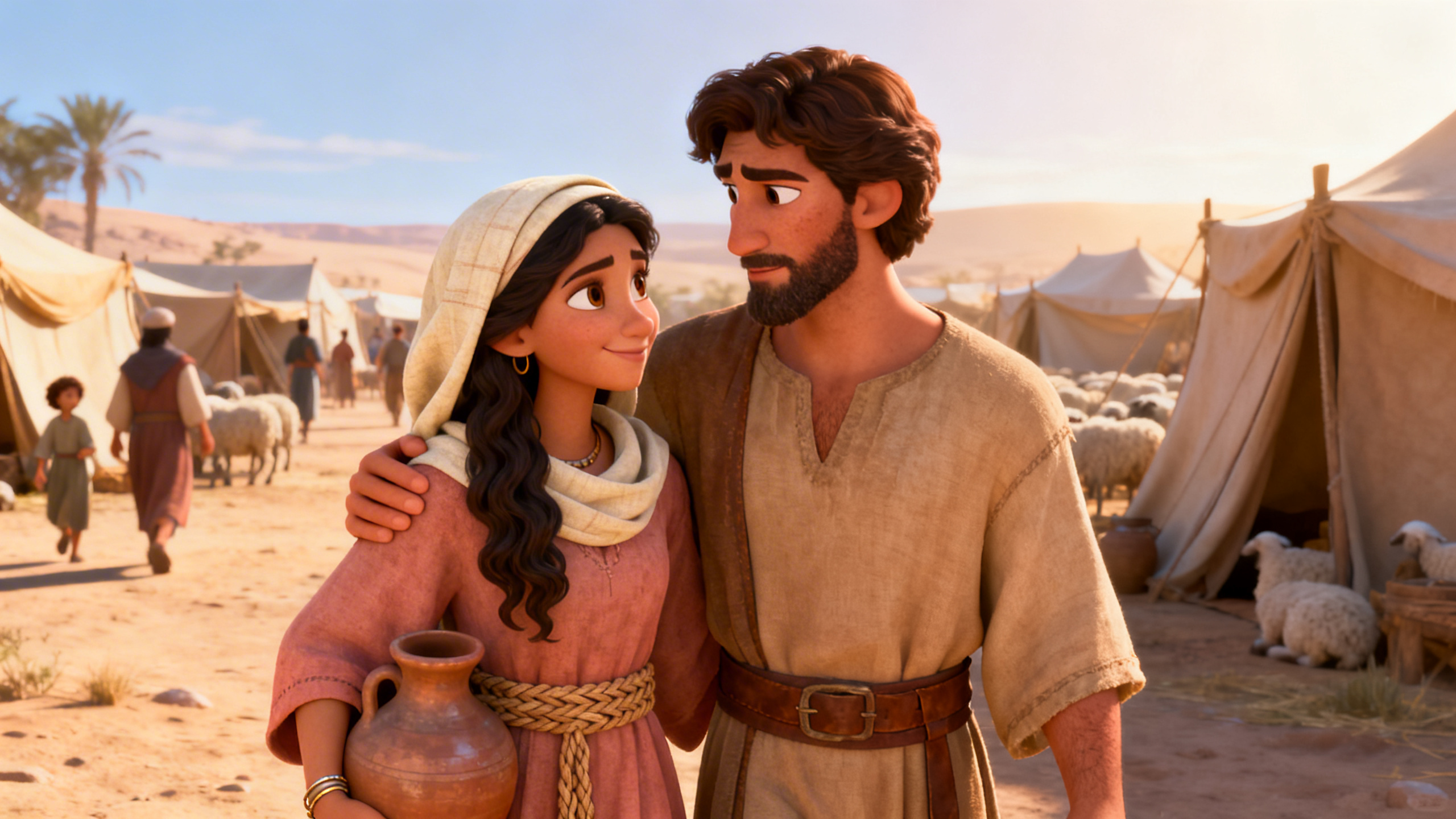
Watch the video devotional
Rachel had everything the world tells us to envy. She was beautiful. She was so loved that Jacob worked fourteen years to marry her, and Scripture says the years “seemed to him but a few days because of the love he had for her” (Genesis 29:20). And still, she lived with empty arms. Her story is a mirror for anyone whose life looks full on the outside while carrying a private, aching longing within.
Beauty was never a shield against longing
The world saw a woman who had it all. Heaven saw a woman who was hurting. “When the LORD saw that Leah was hated, He opened her womb, but Rachel was barren” (Genesis 29:31). Here is the truth that makes Rachel a mirror for us: outward blessing is no protection against inward pain. Being loved by Jacob did not fill the place in her that longed for a child. Your longing is not proof that God has forgotten you. It is often the very place your faith is being formed.
When longing curdles into envy
Rachel watched her sister Leah bear son after son, and the ache turned bitter. “Give me children, or I shall die!” she cried to Jacob (Genesis 30:1). It is one of the most raw, human sentences in the Bible. Comparison had done its work: Leah’s full arms made Rachel’s empty ones unbearable. Jacob’s frustrated reply, “Am I in the place of God?” (Genesis 30:2), points to the real issue. Only God gives life, and only God could meet her here.
The quick fix that never satisfies
Like Sarah before her, Rachel tried to force the promise. She gave her servant Bilhah to Jacob so she could build a family through her (Genesis 30:3-8). Children came, but the rivalry only deepened. The lesson is quiet and sobering: a substitute can give you a result, but it cannot heal the ache. Manufactured answers rarely bring the peace we were really longing for.
God remembered Rachel
Then comes one of the most tender lines in Genesis:
“Then God remembered Rachel, and God listened to her and opened her womb.” (Genesis 30:22)
God had not overlooked her. In His time He listened, and she bore Joseph, a son whose life would one day save nations. “Remembered” does not mean God had forgotten. It means the moment of His action had finally come. The God who remembered Rachel has not lost track of you.
Waiting is where faith is forged
We treat waiting as wasted time, an interruption before the real story begins. But for Rachel, the waiting was the story. It was where her heart was exposed, where envy had to be surrendered, and where she learned that only God could give what she most deeply needed. The length of a wait does not dilute God’s answer. It often deepens it.
A prayer for the woman with empty arms
Father, You see the longing I do not say out loud. Where my arms feel empty, remind me that I am not forgotten. Guard my heart from envy, and keep me from grabbing at substitutes that cannot satisfy. Help me trust that You remember me, and that Your timing is not Your neglect. I rest in You, in the name of Jesus. Amen.
Questions people ask about Rachel’s story
Was Rachel wrong to envy Leah?
Her longing was real and understandable, but envy pulled her eyes off God and onto her sister. The turning point came not when she out-competed Leah, but when God Himself remembered her (Genesis 30:22).
What does it mean that “God remembered Rachel”?
It does not mean God had forgotten her. In Scripture, when God “remembers,” He acts on His covenant. It was simply His appointed time to answer, and He did.
If you are living with a private longing, you are in good company, and you are seen. Keep going with Sarah and Waiting: Trusting God When Time Feels Like the Enemy, or explore the Women of the Bible book on Amazon.
Keep reading